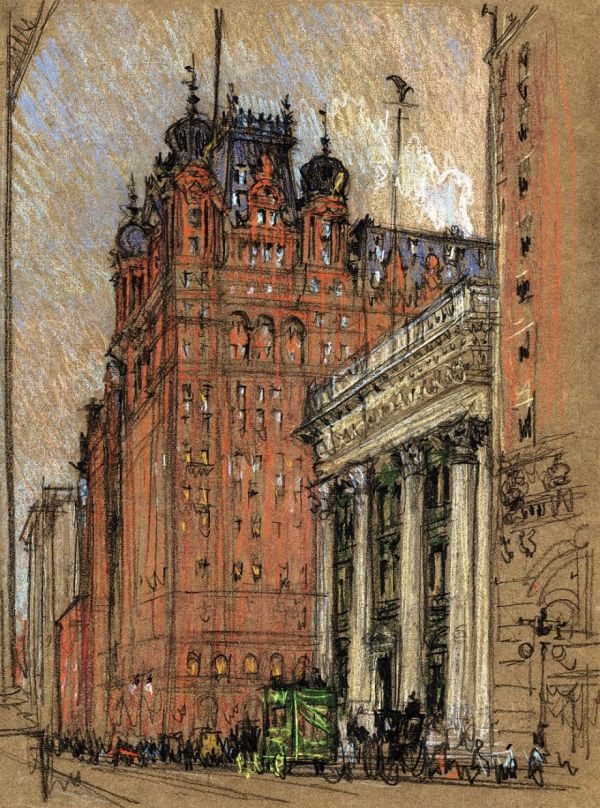
New York City's Waldorf Astoria Hotel was once two hotels, the Waldorf and the Astoria. Both were considered the height of luxury in their day, with electric lights and a bathroom for every suite. The Waldorf Hotel opened in 1893, with the Astoria following in 1897. Before the hotels went up, those sites held two mansions belonging to heirs of John Jacob Astor, New York's first multimillionaire. On one side was Astor's great-grandson, William Waldorf Astor, and the other was his aunt Caroline Astor. The two mansions were separated by a garden.
William moved to England, and had the Waldorf Hotel built in order to ruin the view for his aunt Caroline. Caroline's son, John Jacob "Jack" Astor IV, built the Astoria Hotel next door in revenge. It was many years later when these competing branches of the family made up and combined the two hotels into New York's premiere inn. But what caused the feud between William and Caroline? You'd be surprised at how petty it was, and you can read that story at Ephemeral New York. -via Strange Company
(Image credit: Joseph Pennell)